
 whatsminer
 2025.12.23
 1K+
1K+ 0
0

1 Introduction to Cleaning Hydro-Cooling System
Regarding the hydro-cooling system, cleaning is divided into system cleaning and hydro-cooling miner cleaning. The specific descriptions are as follows.
System Cleaning
The system needs to be cleaned and filtered before hydro-cooling miners are put into a cabinet.
Before connecting the cabinet to the system, deionized water (conductivity ≤ 5 μs/cm) is used to clean and filter system pipeline multiple times to remove dust, welding slag, and other impurities. Cleaning time should not exceed 8 hours, and cleaning liquid should not be left overnight in the system. After the system is cleaned, the deionized water should be drained, and then coolant is injected for cycling (if the deionized water is not completely drained, it will affect various indicators and parameters of the coolant). If there are too many residual impurities in the system, the cooling plates or connectors may easily have the risk of the corrosion and blockage, which may cause the damage to the hydro-cooling miner. We will shoulder no responsibility for such damage to the miner.
Hydro-Cooling Miner Cleaning
The hydro-cooling miner needs to be cleaned and filtered before it is put into the cabinet.
Before the hydro-cooling miner is put into the cabinet, the deionized water (conductivity ≤ 5 μs/cm) is used to clean and filter a flow channel of the hydro-cooling miner multiple times to remove the dust, remaining liquid and other impurities. The cleaning time should not exceed 8 hours, and the cleaning liquid should not be left overnight in the hydro-cooling miner. After cleaning the hydro-cooling miner, the deionized water should be drained, and then the coolant is injected for cycling (if the deionized water is not completely drained, it will affect various indicators and parameters of the coolant). If there are too many residual impurities in the hydro-cooling miner, the cooling plates or connectors may easily have the risk of the corrosion and blockage, which may cause the damage to the hydro-cooling miner. We will shoulder no responsibility for such damage to the hydro-cooling miner.
2 What are requirements before cleaning a hydro-cooling system?
Before cleaning the hydro-cooling system, you need to confirm that supporting conditions meet the following requirements.
Pipeline Material: Use stainless steel pipeline, and avoid to use copper-containing materials (to prevent rust corrosion)
Filtration System:
Main Circuit: Configure a filter with a mesh size ≥100 mesh (suitable for filtering particles in a liquid medium with a diameter ≤149 µm).
Bypass Circuit: Configure a system with 10 µm precision (to filter fine suspended solids)
Component Performance: Ensure that system components withstand temperatures ≥85 °C
Safety Equipment:
Install a 4bar safety pressure relief valve (for pressure control)
Install a constant pressure expansion tank (for pressure stabilization)
3 What are steps to clean a hydro-cooling system?
Before cleaning, prepare one filter each with a precision of 149 µm and 53 µm, and several sheets of 50 µm filter paper.
Step 1: Install a 100 mesh (corresponding to 149 μm precision) filter, and then rinse a hydro-cooling system with tap water for 30 minutes to flush out solid residue from pipeline.
Step 2: Replace the 100 mesh filter with a 270 mesh (corresponding to 53 μm precision) filter, and rinse the hydro-cooling system with new tap water for 30 minutes.
Step 3: Maintain the 270 mesh filter, replace the tap water with deionized water, and then clean the hydro0 cooling system in a cyclic manner for 30 minutes.
Step 4: Take 1 L of rinse liquid from a drainage outlet of the hydro-cooling system, pass it through a 50 μm filter paper, and then detect the number of particles with a particle size greater than 50 μm.
Note: If the number of particles with the particle size greater than 50 μm exceeds 10, rinse the hydro-cooling system again with deionized water as a medium and retest.
4。 What are criteria for determining completion of cleaning a hydro-cooling system?
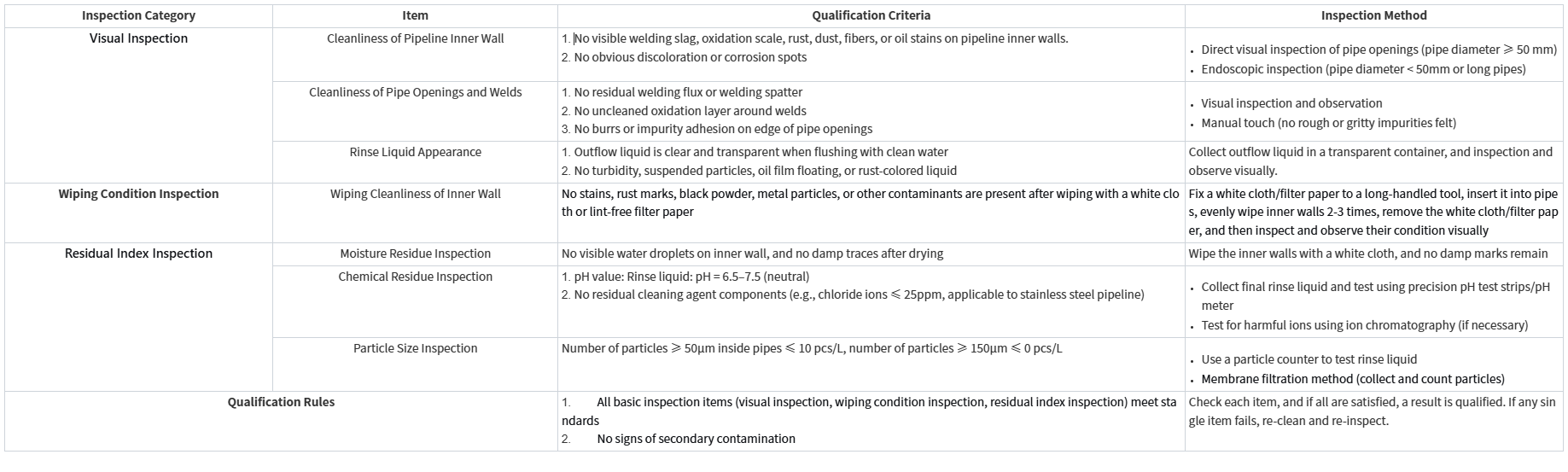
Note:
Conduct visual inspection and wiping condition inspection first, followed by residual index inspection to avoid cross-contamination.
Inspection frequency: Randomly select 30% of pipes from each batch of pipeline for inspection. If one pipe fails, the entire batch must be re-inspected and reworked (re-cleaned).
5. What aspects need special attention during a process of cleaning a hydro-cooling system?
When cleaning a hydro-cooling system, you need to pay attention to the following three aspect.
You need to ensure that an entire cleaning process should not exceed 8 hours, and rinse liquid must not be left overnight in the hydro-cooling system.
After cleaning is complete, you need completely drain deionized water from the hydro-cooling system before filling it with coolant for circulation (residual deionized water can affect coolant parameters).
After a hydro-cooling miners is powered on, an increase in coolant temperature can cause an increase in pressure, and you should pay attention to changes in system pressure.
 Yes
Yes No
No Feedback
- 1WhatsMinerTool_Operation Guide16K+
- 2WhatsMiner Hydro-Cooling Miner_Operation Guide12K+
- 3WhatsMiner Air Cooling Miner_Operation Guide12K+
- 4WhatsMiner API_User's Manual9K+
- 5WhatsMiner Immersion Cooling Miner_Operation Guide7K+
- 6WhatsMinerTool: Performance, Power & Remote Functions Q&A7K+
- 7WhatsMinerTool Overclocking Guide7K+
- 8Simple introduction to quick connectors for hydro-cooling miners6K+
- 9Overclocking Eligibility & Performance Impact Q&A5K+
- 10WhatsMiner Hydro-Cooling Series Installation & Removal Guide4K+